
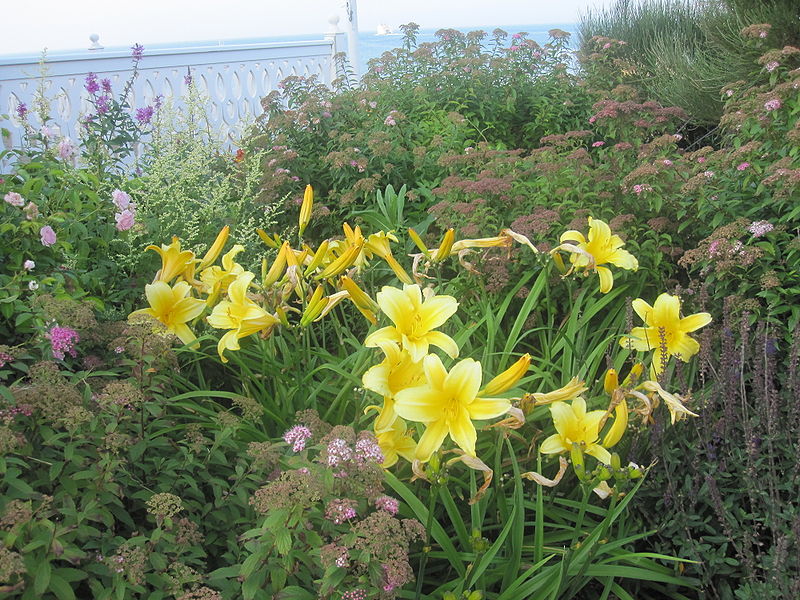
 OK, it’s mid-August. I wish my daylilies looked like this picture. But unfortunately that is not the case. It’s been a hot and dry summer, not a lot of rain, and much of my perennial garden reflects these inhospitable growing conditions – brown, dusty plants in the garden instead of colorful, vibrant, flowering stalks.
In a similar vein, the day lilies that graced my sidewalk border were yellow and smiling a few weeks ago, and are now shriveled and dry.
I confess, that as a gardener, I am not the best at reviving things that are dead. My tendency is to “let it die” and ignore it (after one or two attempts using a different fertilizer, watering, and mulching). With no response or indication of life, I simply accept that the life cycle of the lilies is over – and let them rest in peace.
The other day, though, I was sitting in a friend’s backyard, enjoying dinner on her patio. Some yellow smiley things caught my eye. What?? Lilies! Her lilies were anything but brown, dry and dusty. They were sparkling, yellow, and waving in the breeze.
Of course I had to ask the obvious question. “Why are your lilies looking so good!?”
“You know those brown, dead stalks that stick out of the lily plant? I just pull them out.”, she said. “A lot of people don’t know this about lilies, but they will bloom well into fall if you pull out the dead stuff.”
I do know something about plants and gardens from my background, having grown around a farming family. I’ve heard about fertilizers, soil types, shade and sun, water, mulch, compost and other such topics since I’ve been a little girl.
But in all of these conversations I somehow missed the secret of keeping lilies blooming. Pulling out the dead stuff to infuse new life into the plants did not even occur to me!
It has occurred to God, though. Referring to his Father as a gardener, Jesus tells his disciples that He, Himself, is the true vine.
What does that mean?
Without getting too scientific and technical, in the plant world, the ‘vine’ or stem is the central stalk that carries water and nutrients to the branches and leaves connected to it. According to the AZ Master Gardener
“Stems are structures which support buds and leaves and serve as conduits for carrying water, minerals, and sugars.”
The function of the vine is to supply life to the buds and leaves. Unpacking the thought behind Jesus’ reference to being the true vine, He is making a point that a basic plant knowledge and a little bit of logic explains perfectly. He is the source of life. Elsewhere, He calls himself the resurrection and the life. The bread of life. The way, the truth and the life.
Again, in John 15:5, Jesus calls himself the vine. And He calls His followers the branches. And at the end of the branches, there is fruit. Fruit that translates, not to peaches and pears, but to the fruits of the spirit – love, peace, joy, patience, kindness, goodness, faithfulness, gentleness, self-control.
The master gardener – God – takes a look at this plant. Knowing that the stem is intact and alive, he has no concern that the plant will shrivel up and die. It will always have an alive center.
No, the problem is more with the branches. Some of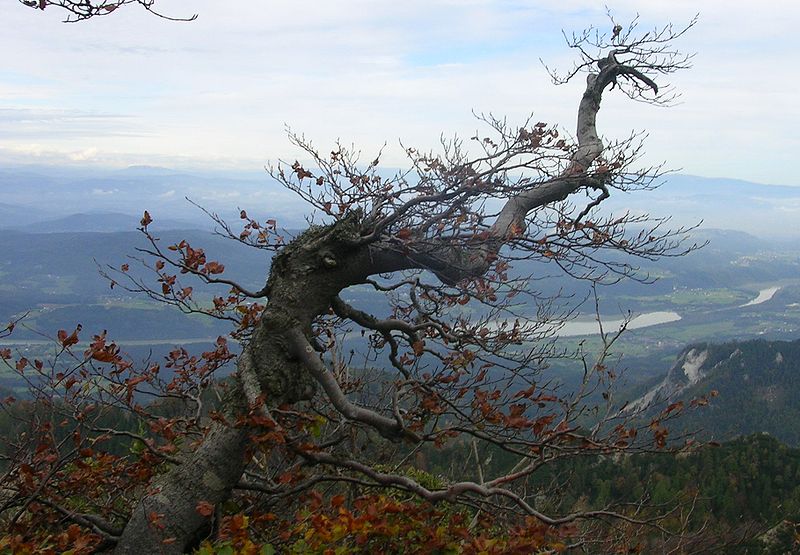 the branches are bearing no fruit whatsoever, they look completely dead. He pulls those out, ready for burning.
As He looks down, some of the branches have some fruit, but our Gardener is not satisfied with that. He wants to see full fruit, flourishing fruit, so he prunes the half dead leaves and branches. Unlike me and my limited knowledge, God knows that the dead needs to be removed in order for the plant to thrive.
The dead stuff? Here’s a thought. Numerous times in scripture Paul directs the followers of Christ to put to death some things. The deeds of the body.
Put to death therefore what is earthly in you: sexual immorality, impurity, passion, evil desire, and covetousness, which is idolatry. Colossians 3:5 ESV
So, say you are doing this, putting these things to death. That means there is dead stuff hanging around your branch, ready for the Gardener to cut it off and get rid of it, to make room for more fruit. He doesn’t give up on the branch, because He knows the secret to lasting fruit. Get rid of the dead stuff.
I’m liking this gardening lesson. How about you?
 Consider the Lilies
3 responses to “Lessons in Gardening: John 15”
Great essay J, loved it.
I like it.
Some day a devotional book once you have enough thoughts accumulated?