

It used to be a silly game we played as kids.. Remember, pretending to not let someone in until they gave us the password? Of course, they didn’t know the password, it wasn’t a real password, and the object of the game was just to laugh at the person trying to think up a good password. Those were the days, my friend.
Passwords are now part of the fabric of my life, and I venture to guess, most 21st century American lives. Not to mention logins. Added to this mix are links to websites in all shapes and sizes, little fragile non-sensical links that connect you to the next link to access information, make bank deposits, pay bills, join associations, register for events, order products, and other important life tasks.
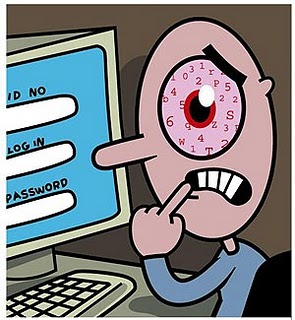 It’s just a link. A trivial password. Yet, think about it for just a minute. Don’t these seemingly insignificant passwords, logins, and links hold great sway over our ability to get access to information, to connect calls, to connect with friends, to do business in the modern world? Seldom do we laugh when we can’t remember a password or login. No longer is it a game to log in or enter a password in a box. It’s not a joke when a link takes us to the wrong spot on the internet, is it? I wonder if the originators of the world-wide web ever envisioned links and password becoming the inescapable key to business, to livelihood, and ultimately to our ability to do things!
Conversely, try to decrease the importance of the series of letters and numbers that constitute logins, links, and passwords, and you will find yourself in a tough spot. A mistake on a link or the absence of a password can infuriate a colleague, break the trust between two people, and cause questioning of a person’s intelligence. A link or a password, to me, does not hold the same value as a thought or an idea. However, in a worldly system that values speed, interconnectedness, convenience and accessibility to the vast world-wide web so highly, disconnection from the web can create a feeling, an angst about being left out of life. Powerful and mighty stuff, to create gatekeepers to webs that people are so eager to get access to. One can be “measured” simply on the basis of their knowledge of links…passwords…and logins. I’ve experienced it. Being harangued for a misplaced password, but not rewarded for a remembered password. The password, although essential, is regarded as a common thing and to not remember it is…well…stupid.
I cannot buy into this system. It is just another attempt – like those who built the Tower of Babel – to be like God, to give power and worship to systems and not to God. God quickly showed the Tower of Babel builders what a mistake this was by taking away what connected them – confusing their languages so they could not speak to each other. God operated – and operates – from a place out of the network, out of the human spiderweb of hyperlinks that make our network so powerful. From God’s perspective, passwords, logins, and links are fragile, like dust. These things we depend on so heavily can be deleted with one misplaced keystroke, lost forever if one lightning strike takes out the hard drive, rendered inoperable by one misplaced number, character of symbol. Then we, like the people of old, become confused and unable to work.
When I consider the peace of the lilies of the field, which do not toil or spin, yet grow in splendor and loveliness and compare it to how I feel when I lose a “password,” or can’t make a “link” work, it makes me realize just how far apart God’s kingdom is from all of this. A child’s small hand can easily crush a carefully built spider web. God must sit in the heavens and laugh at our desperation when we flounder within the spider’s web connecting all of us in such a fragile way, instead of looking to the One who holds all power and authority. He operates beyond space, beyond time, and yes, beyond links and passwords. Now that’s powerful.
 Consider the Lilies
You must be logged in to post a comment.